

The history of the Stade de France, a landmark of sporting and cultural heritage
A journey into the heart of a French landmark
This architectural giant, setting for some of the greatest shared emotions of recent history, holds a wealth of technical innovations and little-known anecdotes.
A journey into the heart of a French landmark
A symbol of French sport and the stage for some of the greatest shared emotions, the Stade de France has embodied a major chapter of contemporary history for more than 25 years. From its ambitious design to the legendary events it has hosted, discover the story of a venue that has become truly iconic.
The fascinating history of the Stade de France: from its creation to today
Born from a strong political vision in 1995, the Stade de France was designed to strengthen France’s bid to host the 1998 World Cup. The objective was clear: to equip France with a national reference stadium, capable of competing with the world’s greatest international venues.Inaugurated on January 28, 1998, by President Jacques Chirac, the stadium entered history just a few months later when the French national team won the World Cup on its pitch. This legendary victory transformed the Stade de France into a symbol of national pride and marked the rebirth of the Plaine Saint-Denis, a former industrial area that has since become a vibrant and emblematic district of Greater Paris.
A unique and visionary architecture
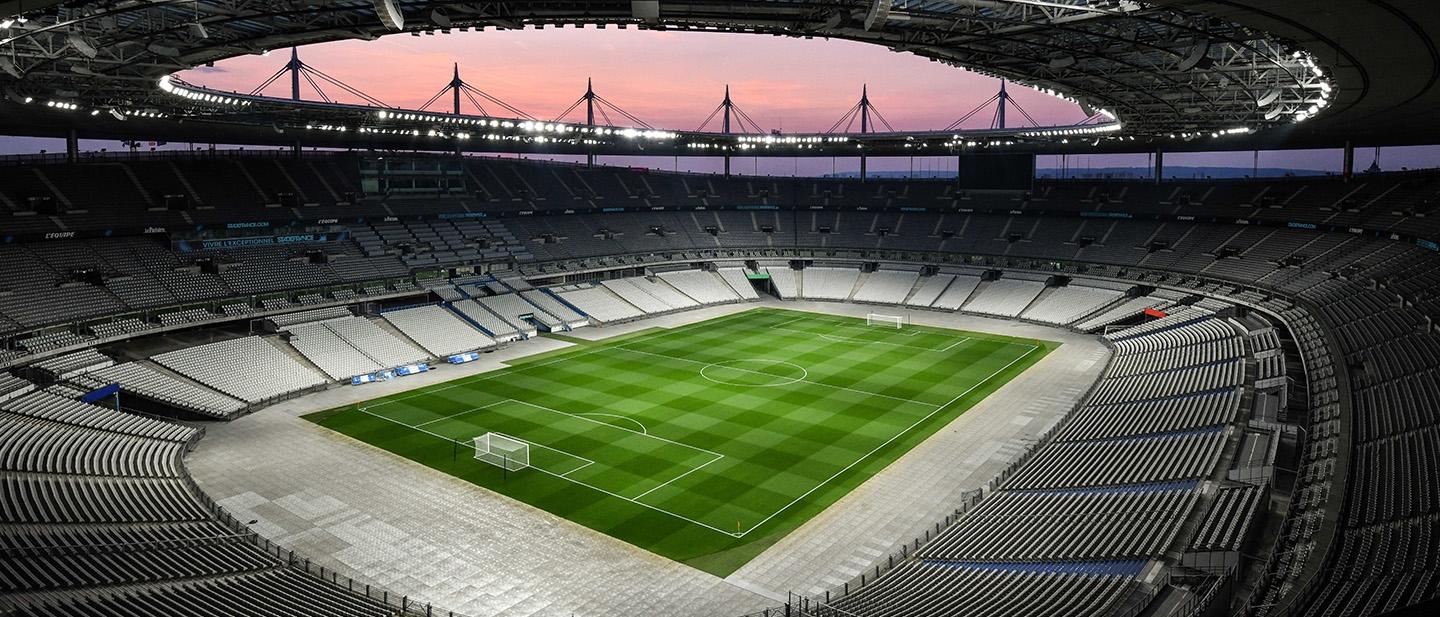
A true technical feat, the Stade de France was designed by architects Macary, Zublena, Regembal, and Costantini. Built in just 31 months (a record for a project of this scale), it stands out for its bold and innovative architecture. Its 6-hectare translucent floating roof, seemingly suspended above the stands, is one of the stadium’s most iconic features. Designed to offer optimal visibility and exceptional comfort, the stadium boasts a modular capacity of up to 80,000 spectators. The retractable lower stands allow the venue to adapt its configuration to different events: football, rugby, athletics, or concerts. This flexibility makes the Stade de France the biggest multifunctional stadium in the Paris region. Equipped with state-of-the-art technology, including a sophisticated lighting system that highlights its structure, the Stade de France delivers a visual and acoustic high-performance experience.
Behind the scenes of a usually inaccessible venue
Behind the stands and beneath the legendary pitch lie areas normally closed to the public. The guided tour offers access to the locker rooms, the players’ tunnel, the press room, and the presidential boxes. You will enjoy a unique opportunity to walk alongside the pitch where the greatest athletes and artists have performed, and to enter areas reserved for VIP guests and professional teams. These behind-the-scenes spaces reveal the stadium’s logistical ingenuity and the anecdotes linked to fan culture and the world of live events.
A venue of legendary achievements and unforgettable emotions
From the 1998 World Cup and Euro 2016 to events during the Paris 2024 Olympic Games, the Stade de France has established itself as a must-see venue for sport and culture. It regularly hosts international football and rugby matches, athletics meetings, concerts and shows by world-renowned artists. Each event contributes to building the stadium’s legend and creating new shared memories in the collective imagination.
A village within the stadium
The operation of the Stade de France relies on a true community of professionals working behind the scenes at every event. Technicians, sound and lighting engineers, production managers, hospitality staff, medical teams, logistics coordinators, and security personnel work in perfect coordination. The guided tour is also an opportunity to gain insight into these fascinating professions and the human backstage operations required to host international-scale events.
A venue committed to environmental responsibility
Committed to a corporate social responsibility approach, the Stade de France implements sustainable practices in its daily operations and major events. These include energy optimisation, responsible waste management, sustainable mobility initiatives, and innovative reuse of turf surfaces. In 2018, the stadium was awarded the “Remarkable Contemporary Architecture” label, recognising its heritage value and importance in French architectural history. A distinction that confirms its status as an exceptional monument, where history continues to be written.
Towards a new era: the Stade de France after 2024
Following the Paris 2024 Olympic Games, the Stade de France enters a new chapter in its history. The 30-year concession awarded to GL Events Venues includes a major renovation and modernisation plan, set to be rolled out progressively from 2027. These developments will focus on visitor experience, infrastructure upgrades, and environmental performance, ensuring the Stade de France will be one of the leading international stadiums of the 21st century.
Still hesitating?
Whether you are a company searching for an original team-building activity, a school group eager to discover a major site of French sporting heritage, or a family passionate about sport, the guided tour of the Stade de France is a truly unique experience. Lasting approximately 1 hour and 30 minutes, the tour gives access to VIP areas, locker rooms, and the players’ tunnel, normally closed to the public. Accompanied by expert guides, you will relive the electrifying atmosphere of major events and walk in the footsteps of the 1998 World Cup champions. A unique immersion at the heart of a monument filled with history, emotion, and collective memory.
