

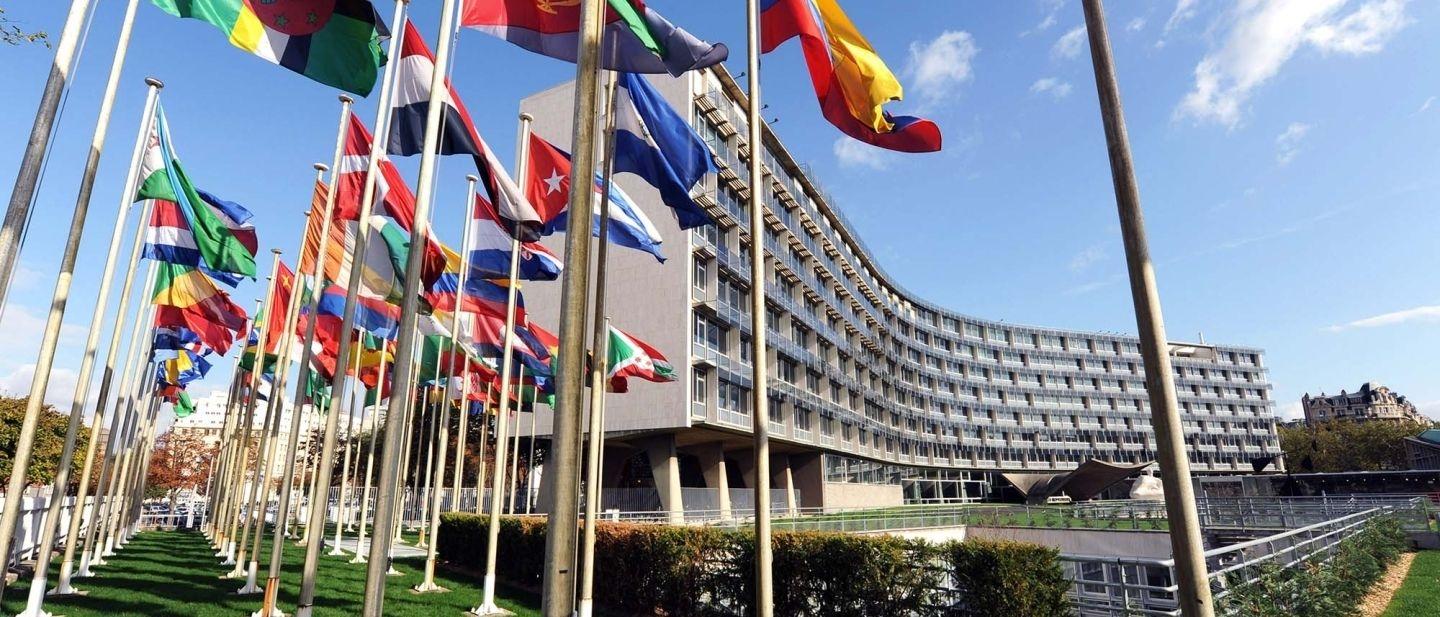
History of UNESCO - an iconic place serving the international community
Discover the history of the UNESCO headquarters
Discover the history of UNESCO, founded in 1945 to build peace through education, science, and culture. Explore its iconic Paris headquarters, combining modernist architecture, major artworks, and universal symbols.
A founding driven by an ideal of peace
UNESCO - the United Nations Educational, Scientific and Cultural Organisation - was officially founded on 16 November 1945, in the aftermath of the Second World War. In a world deeply marked by conflict, its creation was built on a powerful belief: peace cannot be achieved through political or economic agreements alone. It must also be anchored in people’s minds through education, culture, science, and communication. Since its founding, UNESCO has worked to encourage international intellectual cooperation and promote universal values of tolerance, solidarity, and respect for cultural diversity. Today, UNESCO brings together almost every nation in the world around a shared mission: building a more harmonious future through knowledge and culture.
The UNESCO headquarters in Paris: an iconic example of post-war modern architecture
The current UNESCO headquarters, located at Place de Fontenoy in Paris’s 7th arrondissement, was inaugurated on 3 November 1958. It remains one of the major architectural ensembles of the post-war era. Its design is the result of an exceptional international collaboration, true to the spirit of cooperation that defines the institution. The complex includes several buildings connected by iconic spaces such as the “Les Pas Perdus” Hall, a central area for circulation and encounters between representatives of nations from around the world and international civil servants.
A unique open-air museum unlike any other
The UNESCO headquarters also stands out for the central place given to art. The works, mostly donated by UNESCO Member States, are integrated into the building’s indoor and outdoor spaces, turning the site into a true living museum in Paris. Monumental paintings, sculptures, and installations interact with the architecture and reflect the diversity of cultures represented within the organisation. Here, art is not only aesthetic: it becomes a universal language serving dialogue between people. The gardens and meditation spaces extend this approach, inviting contemplation and reflection in an environment where heritage, contemporary art, and international diplomacy coexist.
A symbol of cooperation and World Heritage
As a centre for cultural diplomacy, UNESCO Headquarters hosts major meetings and international forums each year, where policies are shaped on education, biodiversity protection, artificial intelligence governance and bioethical issues. UNESCO is world-renowned for its work in support of World Heritage, protecting cultural and natural sites of outstanding universal value, recognised as a shared heritage of humanity. The flags of member states, conference rooms, and dialogue spaces constantly reflect the mission of this place: bringing people together around a shared heritage and an ideal of peace.
