
 Ossip
Ossip
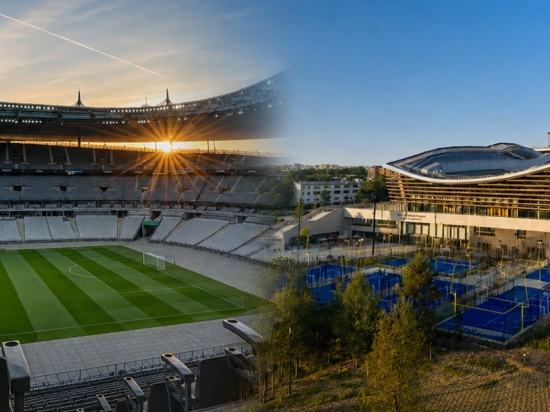
From the Stade de France backstage to the Centre Aquatique Olympique Métropole du Grand Paris
Stade de France - Centre Aquatique Olympique Métropole du Grand Paris - Duration 2h
Explore two iconic venues of the Paris 2024 Olympic and Paralympic Games.
Scholars session
Discover your guided tour
The summer of 2024 marked a defining moment in the history of Saint-Denis. For several weeks, the city hosted some of the highlights of the Paris 2024 Olympic and Paralympic Games, becoming one of the event’s main hubs. This guided tour brings together two of the most emblematic venues of that adventure: the Stade de France, which hosted the athletics events and the Olympic and Paralympic closing ceremonies, and the Centre Aquatique Olympique Métropole du Grand Paris (CAO MGP), the only permanent competition venue built specifically for the Games.
Along a route linking these two sites, discover how Paris 2024 has transformed the area and created a lasting sporting, architectural and urban legacy.
The Stade de France during the Olympic Games
Since its inauguration in 1998, the Stade de France has hosted some of the world's greatest sporting and cultural events. The Paris 2024 Olympic and Paralympic Games added a new chapter to its history.
The stadium hosted the athletics competitions as well as the closing ceremonies of both the Olympic and Paralympic Games. It also welcomed the opening competitions of the Games with the men's and women's rugby sevens tournaments. It was here that the French men's rugby sevens team won France's first gold medal of Paris 2024, creating a historic moment in front of a home crowd.
To meet the requirements of this global event, a number of temporary adaptations were made to prepare the stadium for Olympic and Paralympic competition. From the stands to the changing rooms, from the players' tunnel to pitchside, this first stage of the tour reveals the behind-the-scenes areas of a venue that became one of the symbols of Paris 2024.
A territory transformed by the Games
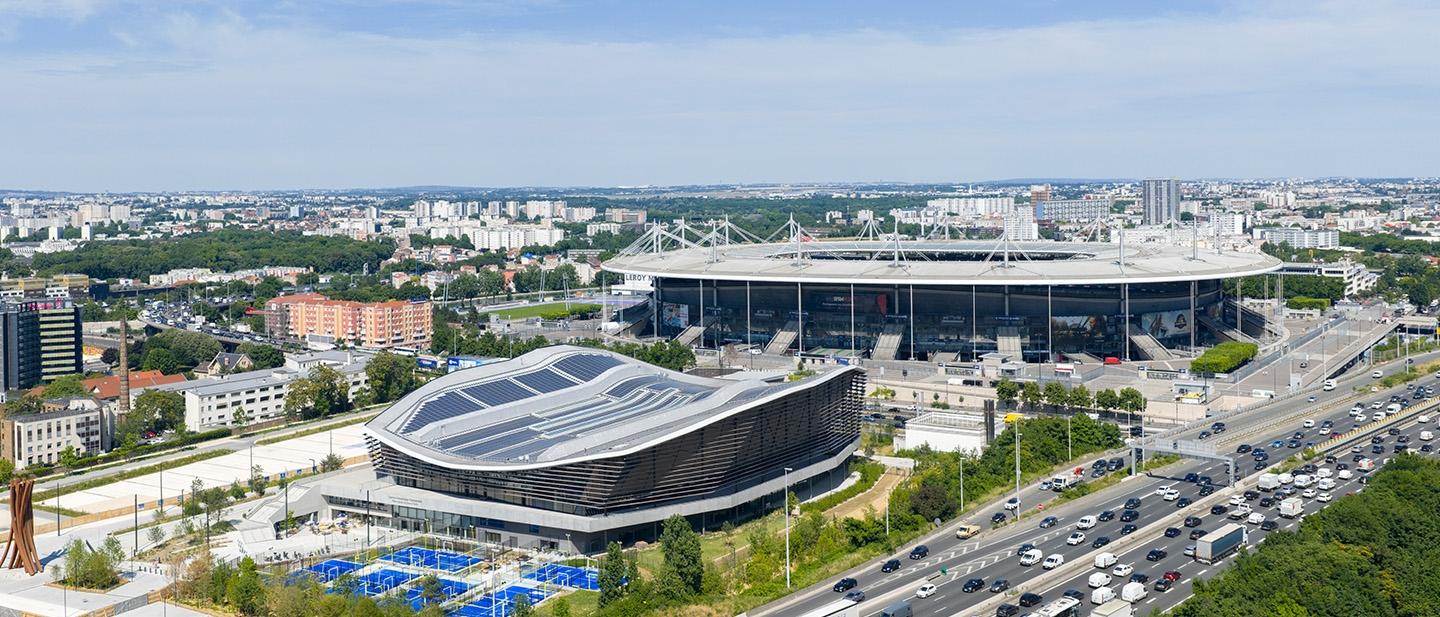
Between the Stade de France and the CAO MGP, the route follows the pedestrian footbridge that now links the two venues. This part of the tour highlights the scale of the transformation undertaken in Saint-Denis for the Games: the redevelopment of Plaine Saulnier, the arrival of the Grand Paris Express, the construction of the CAO MGP and the creation of the Athletes' Village, now transformed into a new urban district.
More than a sporting event, Paris 2024 acted as a catalyst for long-term projects across a rapidly evolving area.
A sports legacy, Olympic and Paralympic
Located opposite the Stade de France, the Paris Olympic Aquatics Centre is one of the most significant achievements of the Games. During the Olympic Games, it hosted artistic swimming, diving and the preliminary water polo competitions. A few weeks later, it also served as a training centre for para-swimming athletes preparing for the Paralympic Games, demonstrating the central role of inclusion and accessibility within the Paris 2024 legacy.
Designed according to the principles of universal accessibility, the building reflects Paris 2024's commitment to inclusion. Its facilities enable athletes, visitors and spectators alike to enjoy the venue and its amenities fully. Its spectacular bio-based timber roof structure, environmental innovations and community-focused purpose have established it as one of the most important legacies of the Games.
Understanding the legacy of Paris 2024
This tour offers a unique perspective on the Paris 2024 Olympic and Paralympic Games through two complementary venues. On one side stands the Stade de France, an iconic venue capable of reinventing itself to host the world's largest events. On the other is the CAO MGP, designed to serve the needs of the local community long after the Games.
Through sporting achievements, architectural innovation, accessibility, inclusion and urban regeneration, this experience reveals how the Games have left a lasting mark on Saint-Denis and the Greater Paris metropolitan area.
Reviews about The Legacy of the Games
Useful information for your guided tour Stade de France - Centre Aquatique Olympique Métropole du Grand Paris
- Late arrivals cannot be admitted more than 10 minutes after the scheduled start time of the tour.
- For security reasons, all bags are subject to inspection before entering the stadium. Please allow 30 minutes before the start of your visit for security checks.
- Large bags, bulky items and luggage are not permitted. Sharp objects (including scissors and knives) are prohibited.
- The Stade de France Museum can be visited freely before the tour.
- During concert set-up and dismantling periods, the Stade de France pitch is fully protected and may not be visible.
- Due to operational requirements and security measures, the tour route may be adapted on the day of your visit.
- The tour ends at the Paris Olympic Aquatics Centre (CAO MGP).
- Visitors must remain with the guide throughout the entire 2-hour tour.
- Independent movement or early departure is not permitted.
- Visitors must follow all instructions given by the guide.
- Any disrespectful or discriminatory behaviour during the tour will result in immediate exclusion.
- To respect the privacy of venue users, photography and video recording are prohibited inside the Olympic Hall.
- PMR Access
Number of persons
Access Stade de France - Centre Aquatique Olympique Métropole du Grand Paris
Address
93200 Saint-Denis
See on Google Maps
Access
Métro : Saint Denis Porte de Paris (ligne 13)
RER : La Plaine Stade de France (RER B) ou Saint Denis La Plaine (RER D)
Bus : 139, 153, 173, 255, 350
Arrival : Centre Aquatique Olympique Métropole du Grand Paris